

Turn BD Signals Into Revenue
Recruitment business development happens in steps. Most agencies know every one. Far fewer have joined them together.
Firefish connects every stage between spotting an opportunity and turning it into a live job, so fewer opportunities stall in an inbox, a spreadsheet or somebody's memory.


Get the Opportunity In
And Make It Visible
A contact left in a browser tab isn't an opportunity, it's a memory, and one only its owner can act on. Firefish shortens the distance between noticing something and recording it, improves the contact so a recruiter can act today, and turns it into a Lead the whole team can see.

Your Pipeline. Your Strategy. Your Data.
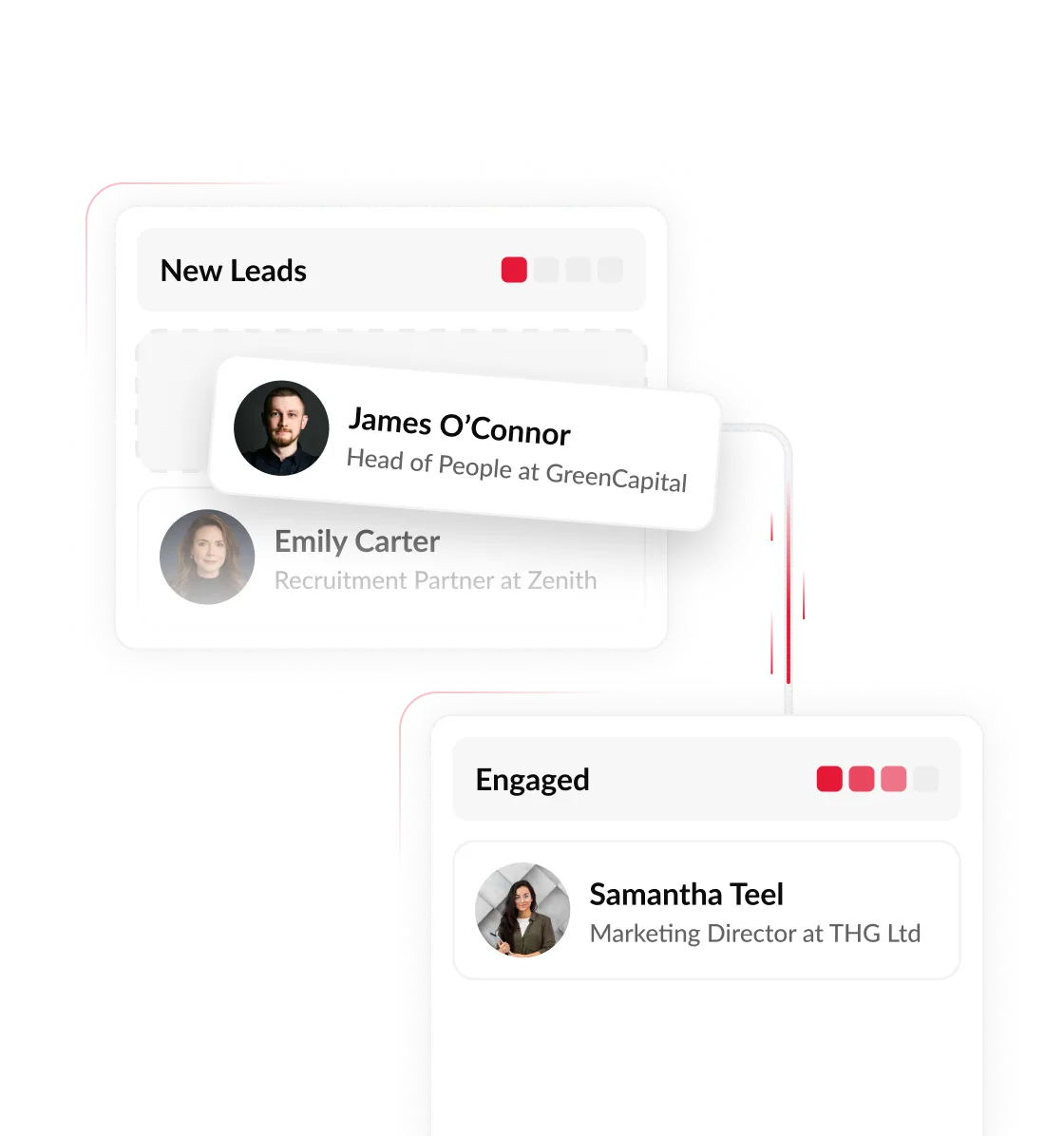
Every Action Captured. Every Lead Enriched.
.png)
Start the Conversation
Then Keep It Alive
Very little recruitment business is won on a first message. These stages are about getting that message out while it's still relevant, keeping the follow-up going in the weeks the desk is busiest, and knowing which conversations have earned the next hour of your team's time.

Write Faster with Email AI.

Track Engagement with Email Intelligence
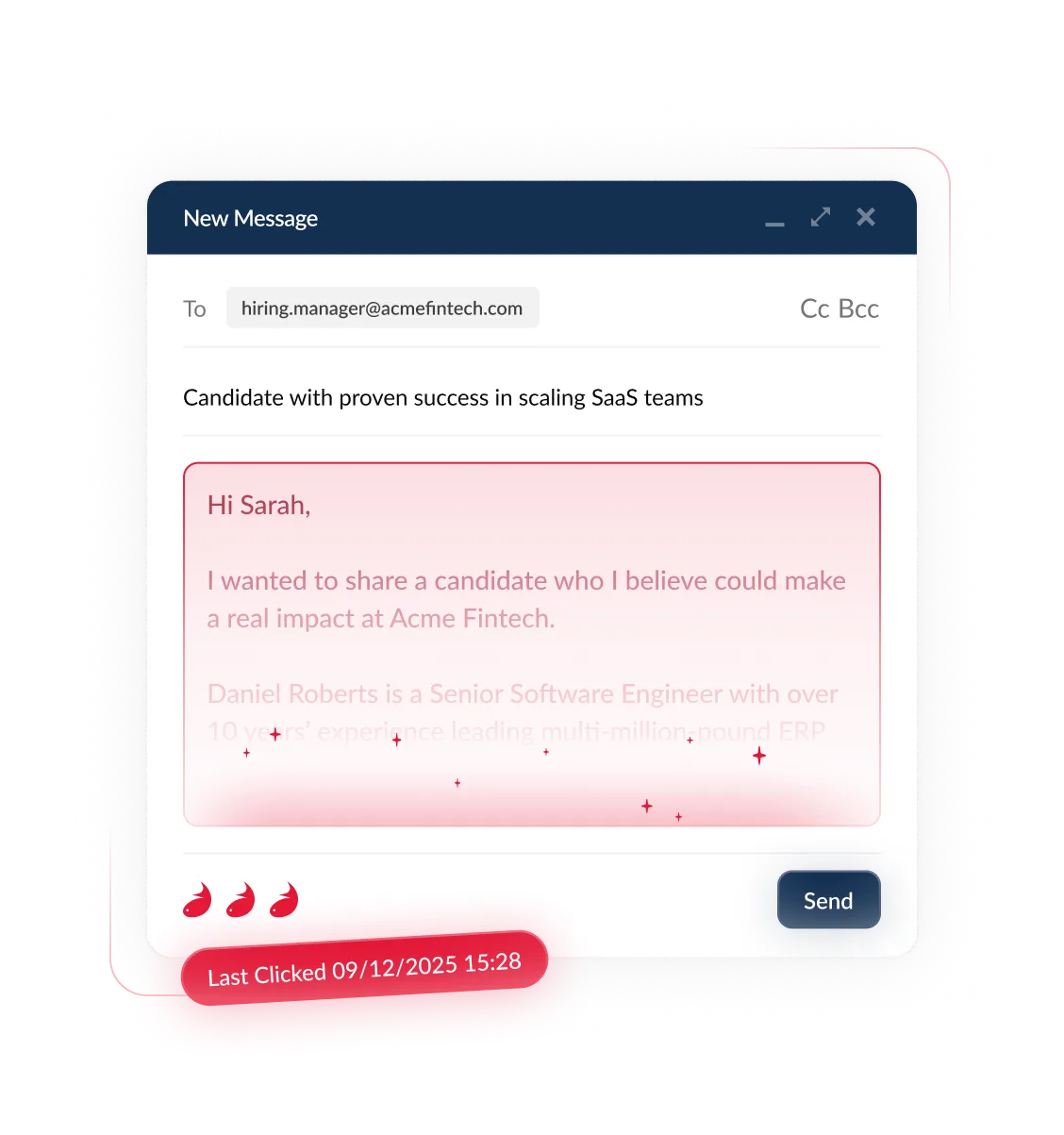
Email Sequencing that helps stop client follow-ups going cold.
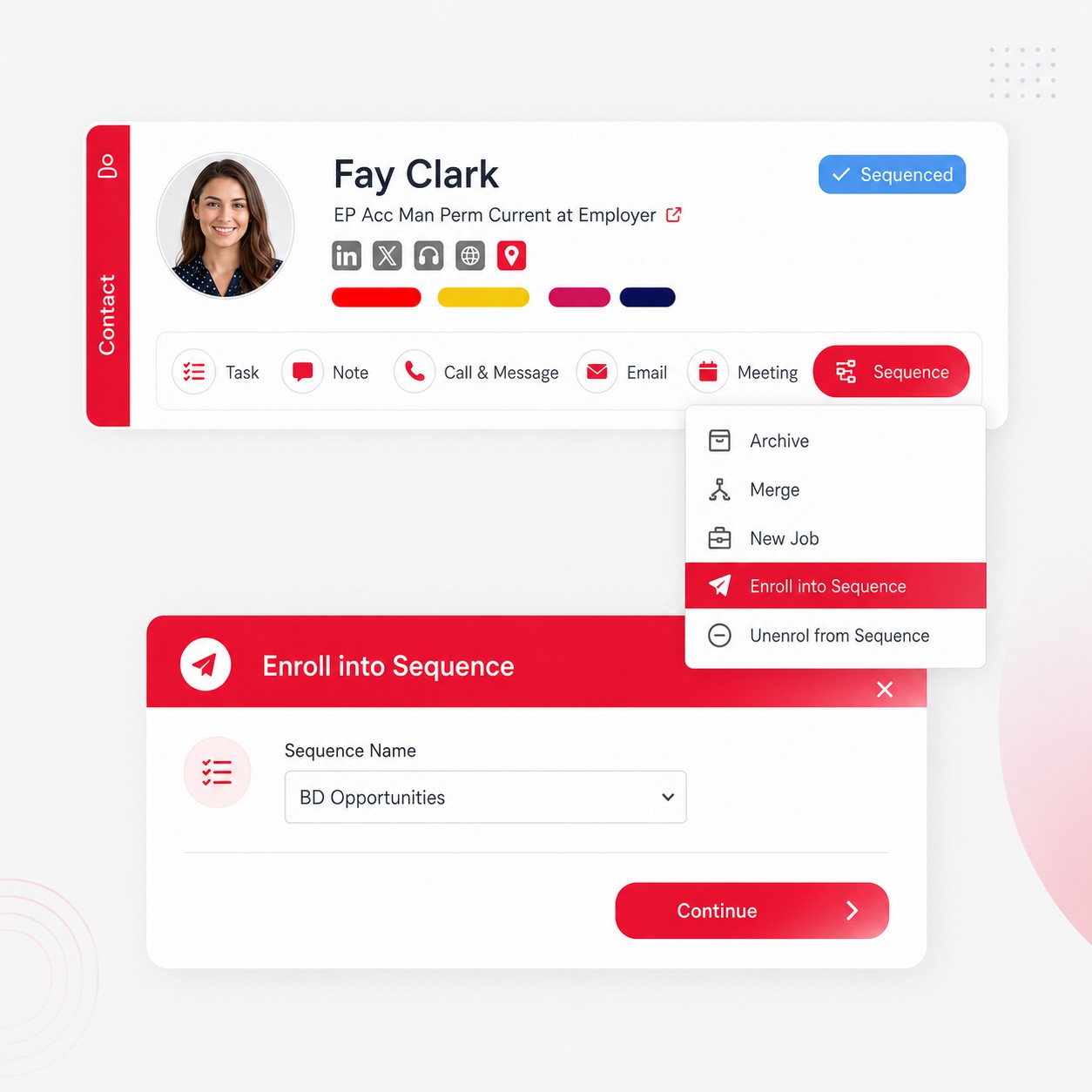
Create Demand
Protect It
Convert It
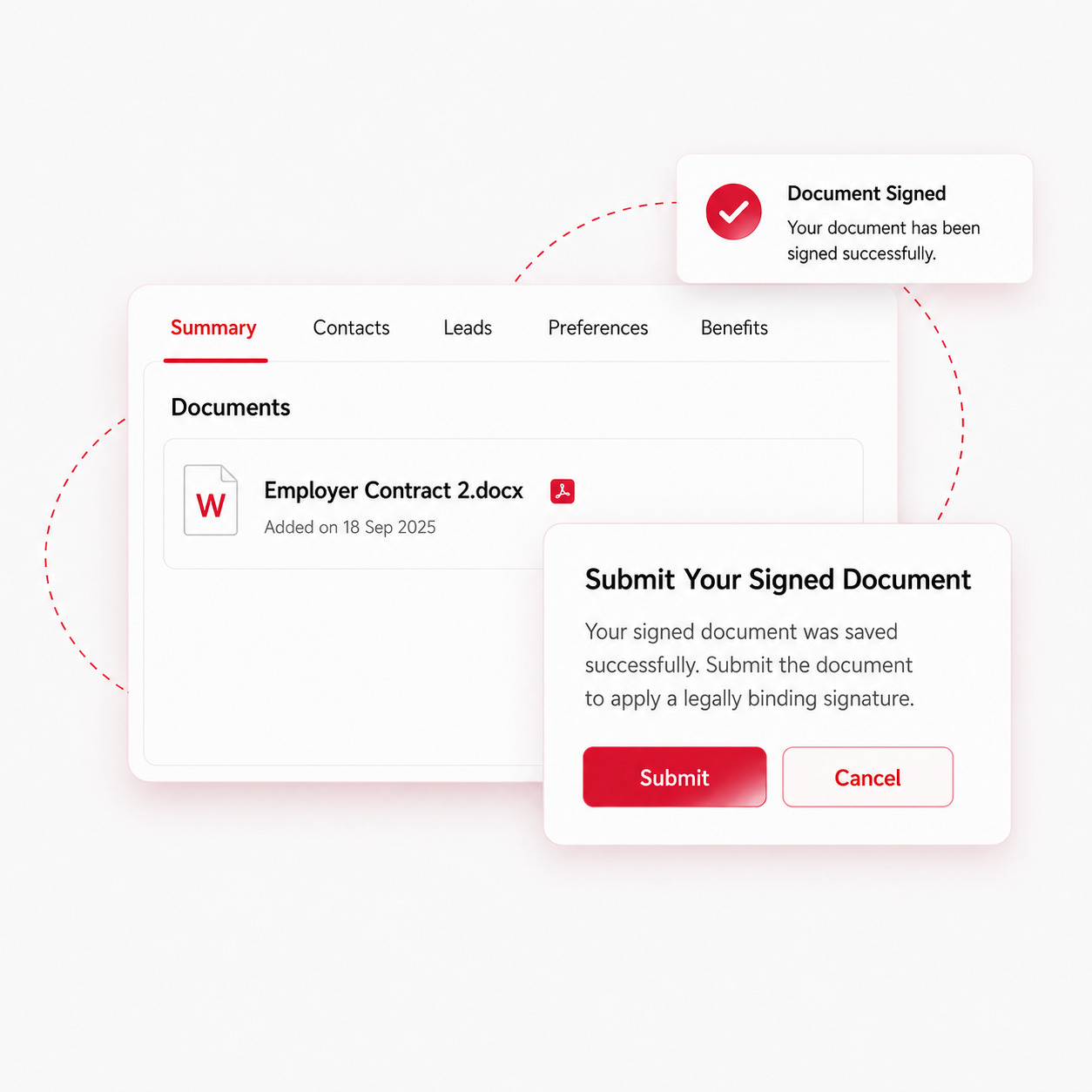
Interest isn't revenue. A prospect who replies, takes your call and likes you is still not a client until Terms are agreed and a job exists. These last stages close that distance: give the client a genuine reason to respond, get commercially ready without stalling the conversation, then move the opportunity into delivery with its history intact.
Spec CVs That Sell Powered by Your Data.

Terms That Move Clients Forward.

Ready to turn your data into revenue


FAQs
It's part of Firefish. Every stage described on this page runs inside the same CRM your recruiters already use for candidates, clients and jobs — there's no separate BD product to buy, install or connect. That's the point: the reason opportunities stall is usually that the stages live in different places.
Not necessarily, and it's worth asking a different question first: what happens after that tool identifies an opportunity? Prospecting tools are generally good at finding and enriching contacts. The risk is the opportunity then sits outside the system where your team manages clients, candidates and jobs. External lead sources can feed straight into the Firefish Leads workflow through the Leads API, so the two don't have to compete.
It shouldn't, and if it does, something has been set up wrong. Recruiters resist CRM admin for good reasons, and asking them to enter more information would defeat the purpose. Capture, enrichment, sequencing and engagement all exist to reduce the manual effort of keeping the commercial picture usable, fewer copy-and-paste round trips, fewer follow-ups held in someone's head.
No. Email Sequencing lets a recruiter plan a series of communications in advance so follow-up doesn't depend on memory, and Email AI helps them finish and improve a message they've already started. The recruiter keeps ownership of relevance, timing, context and judgement, because in recruitment those are the parts that win the work.
Quite possibly more of it than you're currently using, for most agencies the gap is adoption rather than capability. What's included depends on your plan, so the quickest way to find out is to ask your account manager to walk one live opportunity end to end. That usually surfaces both what you already have and where the workflow is breaking.
No. The useful question isn't headcount, it's whether you want to run business development or build the system that runs it. Smaller agencies tend to value a workflow that holds together when BD is competing with delivery on the same desk. Larger ones tend to value consistency and visibility across recruiters and teams. Both are getting the same connected workflow, out of the box, without an integration project.
The Lead converts into the job, carrying the history that created it, the contact, the conversation, the engagement and the agreed Terms. Whoever delivers the role can see how the work was won. This is the handover most agencies rebuild from scratch, and it's the point where business development and recruitment delivery stop being separate processes.