

Rate Automation for Temp Agencies: Fill Shifts Faster and Protect Your Margin

A client needs a worker for tomorrow morning. Your recruiters have suitable candidates available, but before they can confirm the bookings, they need to check the rates.
Which client terms apply? Does the shift cross into a different pay period? Are there guaranteed hours? What happens if one worker wants a higher rate? Every manual check adds another step between an available worker and a confirmed shift.
For temporary recruitment agencies, rate automation can help shorten that process. Applying agreed rules within the booking workflow means fewer calculations, fewer repeated clicks and more time for recruiters to secure workers and fill the next shift.
It also helps agencies grow without making every additional booking another administrative burden.
Rate management affects how quickly your desk can fill work
Rate errors often become visible when someone queries their pay or a client challenges an invoice. But the work involved in managing rates starts much earlier.
Before confirming a worker, a recruiter may need to open the client’s terms, find the relevant rate, check the shift pattern and calculate the pay and charge figures. If those details sit across spreadsheets, emails and individual consultants’ knowledge, even a familiar booking can require several checks. Repeat that process across a busy week and the cost becomes more than administrative time. Recruiters have less capacity to contact candidates, respond to urgent requests and cover last-minute gaps.
Reducing the work required for each booking gives your team more capacity to fill shifts.
That is why rate automation belongs in the conversation about recruiter productivity and agency growth.
Configure repeatable rules once
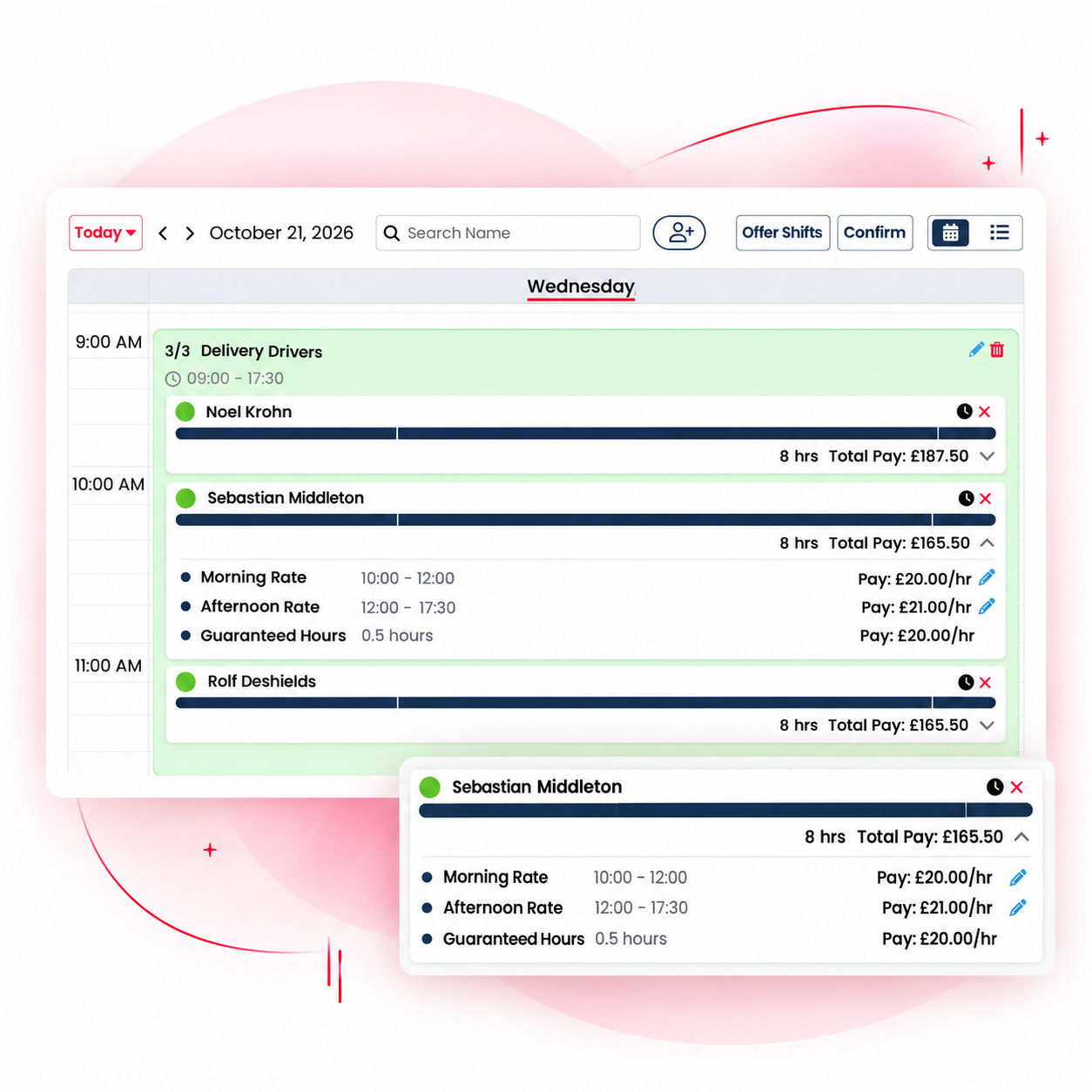
Take a delivery-driver account. Its rate structure might include:
- Different rates for morning, afternoon, night and weekend work.
- Guaranteed paid hours and overtime thresholds.
- Paid or unpaid breaks and agreed time-rounding rules.
- Different pay and charge calculations for particular clients or sites.
These conditions are already known. Rechecking and rebuilding them for every booking adds work without adding value.
In Firefish, agencies can create standard temp rate cards and apply them to client companies, with custom terms where a client needs something different. That gives the desk a consistent starting point for repeat bookings. Recruiters can spend less time establishing which terms apply and move more quickly towards confirming the worker. It also makes the desk less dependent on one experienced consultant remembering every detail of an account. Agreed terms become part of the agency’s process, making it easier for colleagues to cover each other and handle growing booking volumes.

Keep rates connected when the shift changes
The booking is only the starting point. What happens during the shift can change the calculation.
A worker is booked until 17:30, but the client asks them to stay until midnight. Those additional hours might cross into a night-rate period or contribute towards an overtime threshold. When worked hours and rate rules are disconnected, someone has to reconstruct the shift afterwards: check the original booking, establish the actual finish time and work out which rates apply to which hours. Firefish’s booking rate calculations use recorded worked times in place of scheduled times where those actual times have been entered, with a breakdown of the applicable rate periods. That gives the team a clearer basis for reviewing pay and charge figures before downstream processing.
Keeping those details connected helps reduce repeated data entry and the corrections that can follow when the booking and the hours worked tell different stories.
Keep flexibility for the decisions that need it
Consistent rules still need room for commercial judgement.
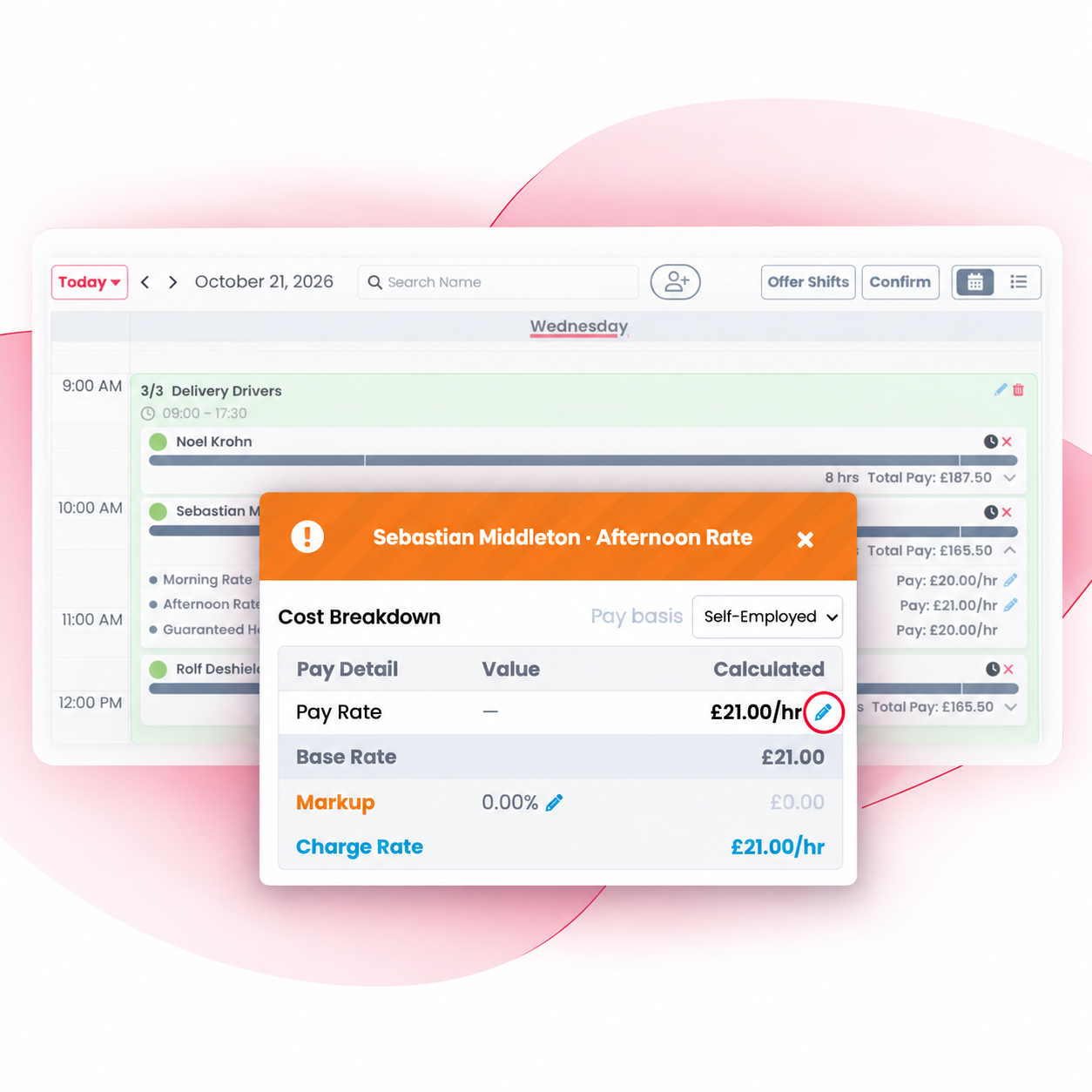
Imagine tomorrow’s shift needs three drivers. Two accept the standard worker pay rate of £21 per hour. The final candidate will only accept £25. The recruiter needs to decide whether to continue searching, discuss the charge rate with the client or accept a lower return to cover the booking. For an eight-hour paid shift, that exception adds £32 in worker pay before any associated employment costs. If the client charge stays the same, the agency absorbs that additional cost. The exception should sit with that worker and booking, while the agreed standard rate continues to apply to the other two drivers.
Firefish supports candidate-specific rate adjustments, allowing recruiters to handle an individual exception without changing the standard rate for everyone else on the booking. This flexibility helps recruiters respond to the circumstances in front of them while keeping the commercial impact in view.
Plan predictable changes before the desk gets busy
Many exceptions can be anticipated.
Bank holidays, Christmas Eve, particular working patterns and agreed changes during an assignment can all affect the applicable terms. Leaving those changes to someone’s memory creates another task at precisely the moment the desk may be busiest.
Firefish supports exception rates for specific dates, modifiers triggered by conditions such as hours or weeks worked, and scheduled changes to rate configuration. Agencies can prepare for known changes ahead of time. For recruiters, that means fewer occasions where a routine booking turns into a search for the person who knows how the account works. For agency leaders, it provides a more consistent way to manage client agreements as the business takes on more workers, sites and shifts.
Measure the effect on delivery and margin
Fewer clicks are useful when they help the desk achieve something.
To understand the value of rate automation, look at what changes in the booking process:
- Time to confirm a worker: How long does it take to move from identifying a suitable, available candidate to confirming the booking?
- Shifts filled per recruiter: Can the team handle more bookings as routine rate administration reduces?
- Rate corrections and queries: How much time goes into investigating discrepancies in pay or client charges?
- Margin per filled shift: Are individual exceptions understood and reflected in the agency’s return?
Availability, compliance and candidate acceptance also shape fill times. Rate automation removes one source of delay, helping recruiters act more quickly once they have found someone suitable.
Tracking these measures shows whether the change is creating capacity, improving delivery and supporting profitable growth.
Give recruiters more time to fill work
As a temp agency grows, the number of conditions around each booking can grow with it. More clients, sites, shift patterns and individual agreements create more detail for recruiters to manage. Putting agreed rate rules into the workflow helps the desk handle that complexity with fewer routine checks. Recruiters can confirm workers with greater confidence, manage exceptions deliberately and spend more of their day on candidate conversations and client delivery.
Firefish brings rates, shift scheduling and timesheets into the same recruitment CRM, helping agencies keep booking information connected as work moves from planning to completion.
See how Firefish can help your temp desk reduce rate administration and deploy workers faster.


